−15%
 −15%
 −15%


Origins
Madagascar vanilla: everything you need to know about the queen of vanillas
Read the guide
Key takeaways
- Bourbon vanilla from Madagascar belongs to the species Vanilla planifolia.
- Terroir and preparation contribute to the aromatic profile of each batch.
- Choose your bean according to the recipe, then store it in an airtight container away from light.
Madagascar vanilla is unanimously considered the queen of vanillas. Rich, indulgent, deep, it embodies the aromatic excellence sought by pastry chefs the world over. With around 80% of world production, the Great Island dominates the market — but quantity does not explain everything: it is the quality of its terroir, its know-how and its curing that have made its legend.
In this complete guide, Galand Vanille takes you from the SAVA region to your kitchen: history, terroir, grades, the journey of a bean, aromatic profiles, uses, storage and price. To go straight to tasting, explore our Madagascar Vanilla collection.
A brief history of vanilla
Vanilla is the orchid of the genus Vanilla, native to Mexico, where the Totonacs and then the Aztecs grew it long before the arrival of Europeans. For a long time, its cultivation remained confined to Central America, for want of a way to pollinate it elsewhere: the natural pollinating insect did not exist on other continents.
Everything changed in 1841, when Edmond Albius, a young slave on the island of Réunion (then Bourbon Island), developed the technique of hand pollination. This discovery paved the way for vanilla growing throughout the Indian Ocean — and notably in Madagascar, which would become the world’s leading vanilla-producing country. It is also from Bourbon Island that the name “Bourbon vanilla” comes.
Why do we speak of “Bourbon vanilla”?
The “Bourbon” name meets two precise criteria: the species must be Vanilla planifolia, AND the bean must come from the Indian Ocean (Madagascar, Réunion, Comoros, Mauritius). Another species, even one grown in the Indian Ocean, is not entitled to the Bourbon name. Bourbon vanilla from Madagascar is its most famous representative.
A word of history: Bourbon vanilla takes its name from Bourbon Island, the former name of Réunion, where hand pollination was developed (by Edmond Albius, in 1841). It was from there that cultivation spread to Madagascar and throughout the Indian Ocean.
You can also explore the species Vanilla planifolia beyond Madagascar in our Vanilla Planifolia collection, and compare its profile with Tahitensis or Pompona.
The terroir: the SAVA region, cradle of Malagasy vanilla
The beating heart of Malagasy vanilla lies in the north-east of the island, in the SAVA region, an acronym of its four main towns: Sambava, Antalaha, Vohémar and Andapa. Antalaha is often nicknamed the world capital of vanilla.
Several factors make this terroir an ideal setting:
- A humid tropical climate, hot and rainy, perfect for the vanilla orchid.
- Volcanic soils, rich and well-drained, which nourish the vine.
- Centuries-old know-how passed down from generation to generation.
It is precisely in this region that Galand Vanille sources direct from the growers, as close as possible to the planters. To understand this model, read our Vanilla direct from the growers page.
The grades of Madagascar vanilla
Not all beans are equal. Madagascar vanilla is classified by grades, according to its quality, its moisture content and its length.
| Grade | Name | Moisture | Length | Use |
|---|---|---|---|---|
| A | Gourmet (TK) | ~30–35% | ≥ 14 cm | Supple, plump beans: pastry, tasting |
| B | Extraction | Lower | Variable | Drier: extracts, infusions, industry |
The Gourmet (A) grade is the most sought after for fine cooking: its beans are supple, oily and rich in seeds. The Extraction (B) grade, drier, is intended for making extracts and flavorings. Galand Vanille favors Gourmet-quality beans, carefully selected and cured — like our Bourbon vanilla from Madagascar.
The journey of a bean: from flower to cured bean
Behind every bean lies considerable work. Vanilla is one of the most demanding spices in the world to produce. Here are the main stages.
1. Hand pollination
The vanilla flower opens for a single day only. With no natural pollinator in Madagascar, each flower must be fertilized by hand, one by one, using a fine point. An experienced grower can pollinate around 1,500 flowers a day during the short flowering season.
2. Ripening
Once fertilized, the bean grows and ripens slowly on the vine for about 9 months. This is a crucial period: it is when the aromatic potential is formed.
3. Scalding
After harvest, the beans, still green and odorless, are plunged into hot water at around 65 °C: this is the scalding stage, which triggers the enzymatic reactions that give rise to the aromas. This thermal shock stops plant life and releases the bean’s aromatic potential.
4. Sweating
The beans are then wrapped and placed in a sweatbox, in the warmth, where they “sweat” and take on their characteristic dark brown color. This is the beginning of vanillin development.
5. Drying
Next comes drying, alternating sun and shade for several weeks, until the right moisture content is reached. The beans lose water while retaining their suppleness.
6. Curing
Finally, curing: the beans rest for several months (generally 3 to 6 months, or even longer) in controlled conditions. The aromas concentrate and become more complex. This is the stage that separates an ordinary vanilla from a great vanilla. At Galand Vanille, we cure our beans for at least 6 months.
The aromatic profiles of Madagascar vanilla
What makes the signature of Bourbon vanilla from Madagascar is its indulgent, warm palette. Typically, you will find:
- Notes of caramel and brown sugar.
- Chocolatey, cocoa accents.
- A buttery, milky roundness.
- Sometimes touches of dried fruit and prune.
This richness makes it the reference vanilla for classic desserts. For more floral or aniseed profiles, turn to other varieties: our article Bourbon, Tahitensis or Pompona compares the character of each.
How to recognize a quality vanilla bean
Before buying, a few simple guidelines let you judge a bean:
- Appearance: a beautiful Gourmet bean is dark brown, shiny, and often supple and oily to the touch.
- Suppleness: you should be able to wrap it around a finger without it breaking (for a fresh, moist bean).
- Length: Gourmet beans generally measure 14 cm or more.
- Aroma: powerful, complex, with no smell of fermentation or mold.
Be aware, however: a longer-cured or “frosted” bean can be drier, or even brittle, without this being a defect. The frost corresponds to natural vanillin crystals that rise to the surface: on the contrary, it is a sign of a high aromatic concentration. Our frosted vanilla from Madagascar is a perfect example, sought after by lovers of intensity. You can also discover our Tsy Taitry vanilla from Madagascar.
How to use Madagascar vanilla in cooking
Bourbon vanilla is remarkably versatile. Here are the essential uses:
- Crème anglaise, pastry cream, flan: split the bean, scrape out the seeds, infuse bean and seeds in the hot milk.
- Ice creams and frozen custards: Madagascar vanilla reigns supreme here.
- Caramels, sauces, ganaches: for an indulgent roundness.
- Pastries and viennoiseries: madeleines, shortbread, brioches. With no infusion needed, our Madagascar Bourbon vanilla powder mixes directly into flour or sugar.
- Homemade vanilla sugar: bury a used bean in sugar, or opt for our ready-to-use vanilla sugar.
Never throw away a scraped bean: it can still flavor a sugar, a syrup or a rum. To master all the techniques, follow our guide how to use a vanilla bean in pastry, and to choose the right vanilla for your recipes, see the guide to perfect pairings.
How to store your vanilla beans
Properly stored, a vanilla bean keeps for a long time without losing its qualities. The golden rules:
- Store the beans in an airtight container, away from air.
- Keep them away from light and heat.
- Do not put them in the refrigerator: humidity and cold encourage mold.
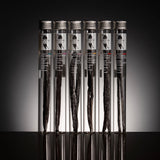
For optimal storage, we recommend our flat-bottomed glass tube, which protects your beans while preserving their suppleness. All our detailed advice is gathered in the complete storage guide.
Why is Madagascar vanilla so expensive?
Vanilla is the second most expensive spice in the world after saffron. This high price is explained by an accumulation of constraints:
- Demanding cultivation: hand pollination, flower by flower.
- A very long cycle: about 9 months of ripening, then months of preparation and curing.
- Intensive labor: scalding, sweating, drying, sorting, curing.
- Sensitivity to climate: cyclones and weather hazards can reduce harvests.
- Strong global demand against a concentrated supply.
Buying direct from the growers does not make vanilla “cheap”, but it guarantees that the fair price really benefits the planters, and that you pay for traceable quality rather than middlemen’s margins. Discover our approach on the Vanilla direct from the growers page and Paul Galand’s story.
The Galand Vanille commitment to Madagascar vanilla
At Galand Vanille, Madagascar vanilla is not just one product among others: it is our signature. Our commitment rests on three pillars:
- Direct from the growers: sourcing as close as possible to the planters of the SAVA region, with no unnecessary intermediaries.
- Selection by Paul Galand: every batch is sorted, tasted and approved personally.
- Curing for at least 6 months: to reveal the full aromatic depth of the beans.
This high standard runs through our whole Madagascar Vanilla collection, as well as our wider selection of exceptional vanillas and our classics. For gifts, think of our gift boxes, notably the Discovery Gift Box, the Vanilla Variety Gift Box or the Vanilla Collector Gift Box for enthusiasts.
FAQ — Madagascar vanilla
Why is Madagascar vanilla called the “queen of vanillas”?
Because it combines an exceptional terroir (SAVA region, volcanic soils, tropical climate), centuries-old know-how and a rich, indulgent aromatic profile. Madagascar also accounts for around 80% of world production.
What is the difference between Bourbon vanilla and Madagascar vanilla?
“Bourbon” is a designation of origin covering the vanillas of the Indian Ocean (Madagascar, Réunion, Comoros, Mauritius). Madagascar vanilla is therefore a Bourbon vanilla — the most renowned of them.
What is the difference between grade A and grade B?
Grade A (Gourmet) designates supple, plump beans, high in moisture (~30–35%) and long (≥ 14 cm), ideal in pastry. Grade B (Extraction) covers drier beans, intended for extracts and flavorings.
Is a dry or frosted bean of lower quality?
No. A fresh bean is often supple and oily, but a longer-cured or “frosted” bean can be drier or brittle without this being a defect: the frost (vanillin crystals) reflects a high aromatic concentration. To understand this phenomenon in detail, read our article on vanilla crystallization.
How do you store a Madagascar vanilla bean?
In an airtight container, away from light and heat, never in the refrigerator. A glass tube is ideal.
Why is Madagascar vanilla so expensive?
Because of its demanding cultivation (hand pollination), its long cycle (≈ 9 months of ripening plus months of curing), the intensity of the labor and strong global demand. It is the second most expensive spice in the world after saffron.