−15%
 −15%
 −15%


Vanilla direct from the growers
From the grower to your kitchen, with no middleman.
Choosing vanilla direct from the growers means paying growers what their work is truly worth and contributing to the local economy of each terroir. At Galand Vanille, every bean follows a carefully managed short supply chain: from the partner planter to your kitchen, by way of Paul Galand’s personal selection and patient curing. The result: fresher, more aromatic, more traceable vanilla — and fair pay for the women and men who grow it.
On this page, we explain what “direct from the growers” really means, what it involves and what it changes, from the bean to your taste buds. To discover our vanilla beans, start with our collection of exceptional vanillas or dive straight into Madagascar vanilla, our signature origin.
What is “direct-from-growers” vanilla?
Direct-from-growers vanilla is vanilla bought as close as possible to where it is harvested, without the usual long chain of intermediaries (multiple collectors, brokers, importers, wholesalers, repackagers). With every link removed, you gain transparency, freshness and fairness.
In practice, buying direct from the growers rests on three pillars:
- A direct relationship with planters and cooperatives in the regions of origin.
- Full traceability: we know where the bean comes from, who grew it and how it was prepared.
- Fair pay for agricultural work, a precondition for lasting quality.
This model stands in direct opposition to the anonymous vanilla sold in supermarkets, often blended, overstocked and sold without any information about its origin.
The Galand Vanille short supply chain, step by step
Our promise is not just a marketing claim: it is a concrete journey, from the plantations to shipping. Here is how a bean reaches you.
1. The planter
It all starts on site, with our partner planters, particularly in the SAVA region of Madagascar (around Antalaha). There, the vanilla is pollinated by hand, flower by flower, then left to ripen for several months on the vine before harvest. It is meticulous, seasonal work that requires patience and know-how.
2. Selection by Paul Galand
Each batch is then sorted and tasted. Paul Galand personally selects the beans according to their moisture content, suppleness, length, aroma content and consistency. Beans that do not meet these demanding specifications are set aside. This human selection is at the heart of our commitment to quality.
3. Carefully managed curing
Next comes curing, a decisive step that is all too often rushed. When the beans are left to rest under controlled conditions, their aromas concentrate, grow more complex and gain depth (notes of caramel, chocolate or ripe fruit depending on the origin). Patient curing, usually over several months, makes all the difference between a decent vanilla and a memorable one. To understand the practical impact of this step, also read our guide how to store your vanilla beans.
4. Shipping
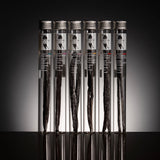
Finally, the beans are carefully packed and shipped quickly to preserve their freshness and moisture content. Find out how it works on our delivery page. To store your beans in the best conditions once they arrive, we offer an ideal flat-bottomed glass tube.
Traceability: knowing exactly where your vanilla comes from
Traceability is the backbone of buying direct from the growers. Because we work closely with the planters, we can document the origin of each type of bean: region, botanical variety, preparation method, curing time. This transparency protects you from opaque blends and guarantees an identified, quality vanilla.
This standard runs through our entire range. Explore, for example, Vanilla Planifolia, Vanilla Tahitensis or the rare Vanilla Pompona: each variety is presented with its origin and aromatic profile.
Fair and ethical pay: quality has a fair cost
We cannot expect vanilla at a derisory price when that means it was grown on impoverished land by underpaid supply chains. Buying direct from the growers makes it possible to pay agricultural work better by removing the intermediaries’ margins. It is a question of ethics, but also of quality: a properly paid planter can invest in the time, care and patience that a great vanilla demands.
- Fewer intermediaries = more value going back to the planter.
- Lasting relationships = consistent quality from one harvest to the next.
- A respected supply chain = know-how that is passed on.
This vision has guided Galand Vanille from the very beginning. To discover Paul Galand’s story and convictions, read our story.
Freshness and taste: why a short supply chain changes everything
Vanilla is a living product. A short supply chain limits the overstocking and handling that dry vanilla out or dull it — all the more so as the vanilla bean is a real chameleon: poorly stored, it can pick up unwanted odors.
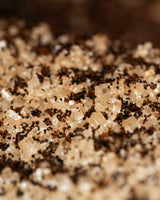
A fresh, quality bean is generally supple, oily and glossy, a sign of good moisture content. Conversely, a longer-cured or “frosted” bean, covered with natural vanillin crystals, may be drier, even slightly brittle: this is not a flaw, but the sign of a sought-after aromatic concentration. Discover our frosted vanilla from Madagascar, prized for its intensity, and our essential Bourbon vanilla from Madagascar, supple and generous.
Why such a price is justified
A great vanilla has a price, and that price tells a story — the story of titanic work, shared between the growers and us. That is exactly what you are paying for.
It all starts with the flower. It opens for a single day only — and even then, the flowers never all open at the same time: one morning, ten flowers here; the next day, a single one a little further on. So you have to be there every day, know how to anticipate the exact moment the buds will open, and pollinate each flower by hand, one by one. And all this, most often, deep in the forest: nothing like the long, neatly aligned rows of a vineyard, where you can spot the bunches at a glance. Here, you have to search, observe and know every vine.
But pollination is only the beginning. Behind every bean, the growers accomplish colossal work, from cultivation to curing: harvesting at the right moment, scalding, sweating, drying, then long months of rest. In all, it takes more than two years for a vanilla bean to be finally ready to flavor your creams, pastries and preparations. Two years of patience, precise gestures and handed-down know-how.
For my part, I carry this work further. I select and sort each bean one by one to keep only the best possible quality, then I continue the curing myself: each bean is kept in perfect conditions so that it goes on improving over time, a little like a great wine. I also carry out real research on curing, in close collaboration with the growers: I run many tests that I then share with them, in order to improve quality harvest after harvest. It is a virtuous circle — each learns from the other, and the vanilla is the better for it, year after year. — Paul Galand
In practical terms, what you are paying for is:
- The titanic work of the growers, from cultivation to curing — more than two years per bean.
- Paul Galand’s hand selection: each bean sorted for the best quality.
- Thorough, extended curing — at the growers’, then continued by Paul Galand — from long months to several years, to improve each bean.
- Research and collaboration with the growers, in a virtuous circle that raises quality with every harvest.
- Buying direct from the growers: freshness, traceability and fair pay for the planters.
- The rarity of varieties and origins you will not find anywhere else (SAVA, Tahitensis from French Polynesia, pompona…).
When you choose a Galand Vanille bean, you are investing in tangible quality: a longer vanilla bean, richer in caviar, more aromatic, that lastingly enhances your creams, caramels and ice creams. To get the most out of it, follow our guide to perfect pairings, explore all our exceptional vanillas or put together your own discovery with our gift boxes.
What sets us apart from supermarkets
In supermarkets, vanilla is an anonymous product: no planter’s name, no precise region, no information about curing. The price may seem attractive, but quality and ethics are rarely there. Buying direct from the growers completely reverses this logic:
- You know the origin and variety of your vanilla.
- You benefit from expert selection and carefully managed curing.
- You support a fair supply chain.
- You have access to rare beans that are seldom available in supermarkets.
Want to compare varieties before you get started? Our article Bourbon, Tahitensis or Pompona sums up the differences in taste.
Our terroirs and our growers
Discover our terroirs and our growers:
Madagascar — SAVA region
What struck me most in Madagascar was how welcoming the people are. People are incredibly kind. They do not necessarily have much, but they always invite you into their homes, show you their region and gladly share what they have.
When I was in Antalaha, we took a pirogue to reach a valley where a large share of vanilla production is concentrated. It takes more than six hours by pirogue from the village to get there, as it is the only possible means of transport. Out there, there is no electricity and no running water. The inhabitants live cut off from everything, but in perfect harmony with nature. They live mainly on what they grow themselves. Life there is organized around a true community, led by a village chief who makes sure it runs smoothly. Their way of life is very different from ours, but they seem to live in simple, sincere happiness.
It is in this valley that some of the finest Madagascar vanillas are found. Its isolation greatly limits vanilla theft, which allows the beans to ripen for more than nine months on the vines. This long ripening, combined with particularly rich soil, gives vanilla of exceptional quality.
The inhabitants are remarkable cooks, cooking exclusively over a wood fire. Their cuisine is simple, but always tasty and well seasoned. As a little anecdote, the village chief invited us to share a meal. We ate rice grown on site, with an incredible taste, served with spinach leaves simmered in a fragrant broth with chicken. It was delicious; I went back for more several times.
Tanzania — Kilimanjaro
The first time I went to Tanzania, I was struck by the power of this land. Around Kilimanjaro, the volcanic soils are exceptionally rich, and this naturally comes through in the vanilla.
Tanzanian landscapes are breathtaking and change radically from one region to another. Around Kilimanjaro, everything is green and lush: the waterfalls, the streams and the abundance of water create ideal conditions for growing vanilla. The farther you move from this region, the drier and more arid the landscapes become, giving way to the great plains roamed by the iconic wildlife of East Africa.
When we started working with the local growers, vanilla cultivation and, above all, curing were still poorly mastered. Yet the region has some of the richest land in the world for growing exceptional vanilla. A large part of our work therefore consists of passing on the knowledge needed to prepare, dry and cure the beans. By improving these skills, the growers can fully reveal the potential of their terroir and reach remarkable levels of quality.
It is this sharing of knowledge that today makes it possible to add more value to their work, improve their income and bring forward a Tanzanian vanilla recognized for its excellence.
Colombia — Bahía Solano
What struck me in Colombia was the incredible botanical diversity of the vanillas you can find there, and how easily you come across wild vanilla.
The growers are only just beginning to develop vanilla cultivation, and there is still a lot to learn. We work hand in hand with them to improve curing methods and the transition from green vanilla to black vanilla, in order to achieve the best possible quality.
There is a real exchange with the growers: we share our respective knowledge and experience to identify the best practices. As this is a new region for vanilla cultivation, you also find botanical varieties that are still little known, or even completely unknown. This involves a great deal of research, as curing methods vary from one variety to another.
For me, this support is essential, because better-quality vanilla allows the growers to be better paid. So it is an important issue, as much for them as for us.
Indonesia — Sulawesi
In Indonesia, the soils are volcanic in origin and particularly rich. The vanilla plantations stretch around a still-active volcano, with smoke visibly rising from its summit. This combination of vanilla and volcanic surroundings creates a spectacular setting.
During this trip, I was able to meet several growers, some of whom live deep in the jungle, very far from any form of modern civilization. They live in communities, in simple dwellings, and live mainly on what they grow themselves.
Here, vanilla grows among other crops such as coffee, pepper, nutmeg, cinnamon and many other spices. This plant diversity contributes to the aromatic richness of the terroir.
What is particularly striking is the naturally high vanillin content of the beans. The vanillas develop a powerful aromatic profile, typical of Indonesian terroirs. The richness of the volcanic soils brings exceptional intensity and depth, giving rise to vanillas with a unique character, truly out of the ordinary.
And for professionals?
Pastry chefs, chocolatiers, restaurateurs, ice cream makers: buying direct from the growers gives you access to consistent, traceable vanilla built for excellence. Discover our dedicated offer in the Professional collection. For any custom request, contact us via the contact page.
FAQ — Vanilla direct from the growers
What is direct-from-growers vanilla?
It is vanilla bought as close as possible to the planters, without the usual long chain of intermediaries. It is fresher, more traceable and allows fairer pay for agricultural work.
Is direct-from-growers vanilla really better?
Yes, for the same quality of selection. A short supply chain limits overstocking and preserves the aromas. Combined with human selection and carefully managed curing, it gives noticeably more aromatic beans.
Why is it more expensive than in supermarkets?
Because it reflects vanilla that is traced, hand-selected, slowly cured and sourced from a fair supply chain. You are paying for real quality and fair pay for the planter, not an intermediary’s margin.
Is a dry or frosted bean of lower quality?
No. A fresh bean is often supple and oily, but a longer-cured or “frosted” bean (vanillin crystals) can be drier or brittle while being excellent: it is the sign of a high aromatic concentration.
Where does Galand Vanille vanilla come from?
Mainly from the SAVA region in Madagascar, as well as from French Polynesia (Tahitensis) and other selected terroirs such as Tanzania. Each origin is traced and presented with full transparency.
How should I store my beans once they arrive?
In an airtight container, away from light and heat. Our flat-bottomed glass tube is perfect for this. Find all our advice in the storage guide.