−15%
 −15%
 −15%


Techniques
How to use a vanilla bean in pastry: techniques and tips
Read the guide
Key takeaways
- Split the bean lengthwise, then scrape out the caviar with the back of the knife.
- Infuse the caviar and the bean: both contribute aromas.
- After use, a bean that is merely spent can still flavor sugar.
You have just received some beautiful beans and you are wondering how to use a vanilla bean to get the most out of it? Splitting, scraping out the caviar, infusing, dosing correctly, then reusing the empty bean: every step counts in revealing the more than 200 aromatic compounds contained in natural vanilla. At Galand Vanille, Paul Galand selects his beans directly from the growers to guarantee suppleness, shine and aromatic power. In this complete guide, you will learn professional techniques, precise dosages (per liter and per recipe), zero-waste reuse methods, as well as the mistakes that ruin a preparation.
Before you start, choose a supple, fragrant bean: browse our collection of exceptional vanillas to start off on the right foot.
Choosing the right bean before you start
Even before you split anything, the result depends on the quality of the bean. A fresh, well-cured vanilla bean can be recognized by several signs:
- Suppleness: it should bend without breaking. A brittle bean has dried out and lost aroma.
- Shine and oiliness: a beautiful bean is slightly oily, a sign of aromatic richness.
- Fragrance: intense, complex, never aggressive.
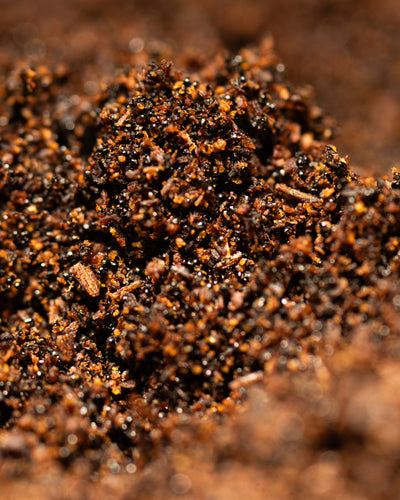
- The caviar: dense and black inside.
This is exactly what Paul Galand’s selection direct from the growers guarantees. To get off to a good start, choose a variety suited to your project: the versatile Bourbon from Madagascar for classic pastry, or explore the whole vanilla collection.
Step 1: split and scrape the bean (collect the caviar)
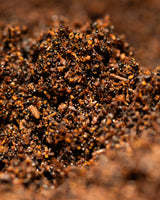
The “caviar” is all the tiny black seeds inside the bean. This is where a large part of the aromas is concentrated. Knowing how to use a vanilla bean begins with this precise gesture.
- Lay the bean flat on a board.
- With the tip of a knife, split it lengthwise, from one end to the other.
- Open the two halves and scrape the inside with the back of the blade to collect the caviar.
- Add this caviar to your preparation, and keep the empty bean: it will still be useful (see below).
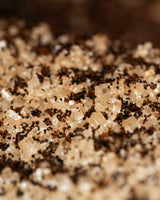
A beautiful supple bean, like our Bourbon vanilla from Madagascar, splits without breaking and releases generous caviar. For maximum intensity, the frosted vanilla from Madagascar, rich in vanillin crystals, is spectacular. This natural frost is in no way a defect: to understand where these crystals come from, read our article on vanilla crystallization.
Step 2: infusion, the heart of the technique
Infusion extracts the aromas into a liquid (milk, cream). It is the supreme method in pastry — and the ideal method is cold infusion.
Cold infusion: the supreme method
- Split the bean and scrape out the caviar.
- Let the bean and the seeds infuse in the cold liquid (milk, cream) in the refrigerator for 24 to 48 h.
- Strain through a sieve before use.
- Retrieve the bean (rinse it and dry it to reuse it).
Cold infusion preserves the most delicate aromas — floral, fruity — that heat alters. The result is remarkably refined, especially with a Tahitensis vanilla from Tahaa, whose floral notes come through fully when cold. To choose the right variety for each dessert, see our guide to perfect pairings.
Express infusion, hot
For an express infusion, hot but off the heat: heat the milk or cream without boiling (around 80 °C), add the caviar and the split bean, remove from the heat, cover and leave to infuse for a few minutes, then remove the bean. Handy when time is short, but cold infusion remains ideal.
Step 3: adding the caviar directly to doughs and batters
For brioches, loaf cakes, shortbread, buttercreams or tart doughs, you don’t infuse: you add the caviar directly.
- Mix the caviar with the sugar or the softened butter to distribute it well (the seeds disperse better in fat or sugar).
- Then add to the other ingredients.
- Tip: rub the caviar between your fingers with a pinch of sugar to avoid clumps.
Vanilla Planifolia (Bourbon) is ideal for these indulgent preparations that go into the oven.
Detailed dosages: per liter and per recipe
The right dosage depends on the richness you want and on the serving temperature (cold masks vanilla, so you use more). Here are the professional guidelines.
| Preparation | Quantity of liquid / base | Recommended dosage |
|---|---|---|
| Crème anglaise | 50 cl of milk | 1 bean |
| Pastry cream | 50 cl of milk | 1 bean |
| Crème brûlée | 50 cl of cream | 1 bean |
| Ice cream / sorbet | 1 liter of base | 2 beans |
| Panna cotta / Chantilly cream | 50 cl of cream | 1 bean |
| Brioche / loaf cake | 500 g of flour | 1 bean |
| Caramel | 250 g of sugar | 1 bean |
| Chocolate ganache | 250 g of chocolate | 1/2 to 1 bean |
| Infused rum (rhum arrangé) | 70 cl | 1 bean |
Golden rule: for a preparation served very cold, increase the dose by about 50%. Cold dulls the aromas. To go further on variety/recipe pairings, see our “which vanilla to choose” guide.
Understanding infusion: what really happens
Infusion is not just a mechanical gesture: it is a transfer of aromas from the caviar and the bean into the fatty liquid (milk and cream are excellent carriers of aroma, because many vanilla compounds are fat-soluble). This explains why:
- An infusion in cream will be richer than an infusion in water.
- Time matters more than temperature: a long cold infusion (24 to 48 h in the refrigerator) preserves the aromas better than exposure to heat.
- Straining through a sieve at the end of the infusion gives you a clear liquid, rich in aromas.
This is also why delicate varieties such as Tahitensis, rich in fragile floral compounds, benefit from cold infusion. More generally, cold infusion is ideal for all varieties, because heat alters the most subtle aromas.
Adapting the technique to the recipe
Not every preparation calls for the same gesture. Here is how to decide between infusion and direct incorporation:
- Liquid preparations (crème anglaise, pastry cream, crème brûlée, ganache): cold infusion for 24 to 48 h + caviar, then strain through a sieve (failing that, an express hot infusion off the heat).
- Cold preparations (ice cream, panna cotta, Chantilly cream): cold infusion + caviar, to preserve all the finesse.
- Doughs and batters (brioche, loaf cake, shortbread, buttercream): add the caviar directly to the sugar or butter.
- Drinks and spirits (infused rum, hot chocolate): long cold maceration.
For the details variety by recipe, our guide to perfect pairings is the ideal complement to this method.
Reusing the empty bean: zero waste, maximum aroma
A scraped bean retains a great deal of fragrance. Here are three ways to make the most of it — an essential habit when you know how to use a vanilla bean from A to Z.
Homemade vanilla sugar
- Slip 1 to 2 empty (dried) beans into a jar of 500 g of sugar.
- Close and leave to infuse for 2 to 3 weeks, shaking from time to time.
- The sugar takes on a lasting fragrance; top it up as you go.
An empty bean will thus flavor homemade vanilla sugar — and if you prefer a ready-to-use result, discover our vanilla sugar or the whole Vanilla sugar collection.
Homemade vanilla extract (vodka or rum)
- Split 5 to 6 beans (whole or empty) and place them in 25 cl of neutral vodka or rum.
- Leave to macerate away from light for at least 8 weeks (2 to 3 months is better), shaking every week.
- You get an incomparable natural extract, with no additives.
The longer the maceration, the more depth and color the extract gains. Strain before use, or leave the beans in the bottle for continuous infusion. This homemade extract advantageously replaces store-bought flavorings in all your recipes, from creams to cake batters. A Bourbon from Madagascar gives a classic, indulgent extract; a Tahitensis, such as the Tahitensis from Papua New Guinea, brings a more original floral note.
Vanilla powder
- Let the empty beans dry completely (in the open air for several days, or in a very low oven).
- Blend them finely, then sift.
- This powder flavors creams, yogurts and doughs, and adds pretty black specks.
For a ready-to-use powder, with no drying or blending, discover our Madagascar Bourbon vanilla powder, made from whole ground beans.
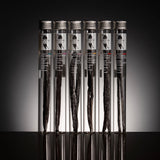
To store your beans in optimal conditions before and after use, an airtight flat-bottomed glass tube is ideal. All the storage details are in our complete storage guide.
Mistakes to avoid at all costs
- Boiling the vanilla. Prolonged boiling evaporates the finest aromas. Always infuse off the heat, covered.
- Throwing away the empty bean. That wastes half of its aromatic potential. Recycle it every time.
- Confusing natural vanilla with synthetic vanillin. A bean contains more than 200 aromatic compounds; artificial vanillin reproduces only one of them. The difference in complexity is enormous.
- Under-dosing cold preparations. Ice creams and entremets served chilled call for more vanilla.
- Storing the beans badly, which then dry out and become brittle. Keep them somewhere cool, away from light, in an airtight container.
Natural vanilla vs synthetic vanillin: why it changes everything
Many store-bought products display a “vanilla” taste obtained with synthetic vanillin, a single molecule manufactured industrially. A natural bean, however, is a whole orchestra: more than 200 aromatic compounds (woody, fruity, floral, spicy, balsamic notes) that unfold on the palate with length and depth.
- Synthetic vanillin gives a flat, monolithic note, often too sweet.
- Natural vanilla in the bean brings complexity, persistence and the famous visible caviar, a mark of perceived quality.
It is precisely to preserve this richness that Galand Vanille works directly with the growers and selects its beans. In use, the difference is immediate, especially in a cream or an ice cream where vanilla is the star.
Quick storage: keeping your beans supple and fragrant
Using a bean well also means storing it well between two recipes. A few simple rules:
- Store the beans away from light, heat and air.
- The ideal container is airtight: a flat-bottomed glass tube protects them perfectly.
- Avoid the refrigerator for long-term storage (risk of condensation and mold); choose a cool, dry place instead.
- A slightly stiffened bean can be revived by wrapping it in a damp cloth for a few minutes, or by reusing it directly in an infusion.
The complete instructions, with all the methods and durations, can be found in our complete guide to storing vanilla beans.
Which variety for which use? The expert reflex
Knowing how to use a vanilla bean also means choosing the right variety:
- Planifolia / Bourbon (Madagascar): the indulgent all-rounder, perfect for hot preparations and baking. See the Madagascar Vanilla collection.
- Tahitensis (Tahaa, Raiatea): floral and fruity, ideal when cold. Discover the Tahitensis vanilla from Raiatea and the whole Vanilla Tahitensis collection.
- Pompona (New Caledonia, Brazil): rare, woody and spicy, magnificent in spirits and savory dishes. See the Pompona from Brazil and the whole Vanilla Pompona collection.
To compare several profiles, the Discovery Gift Box is the best starting point. All our gift boxes are gathered in the gift boxes collection.
FAQ: how to use a vanilla bean
Should you use the whole bean or only the caviar?
Both! The caviar flavors directly, and the split bean, infused then removed, still releases a lot of aroma. Don’t throw the bean away: reuse it.
How long should you infuse a vanilla bean?
24 to 48 h in the refrigerator, then strain through a sieve. Cold infusion, which takes longer, preserves the most subtle aromas.
How many beans for one liter of ice cream?
Allow 2 beans per liter, because cold dulls the perception of vanilla.
How do you make homemade vanilla extract?
Macerate 5 to 6 split beans in 25 cl of vodka or rum, away from light, for at least 8 weeks.
Can you reuse a bean that has already been infused?
Yes: rinse it, dry it, then use it for vanilla sugar, a homemade extract or a powder. Details in our storage guide.
How do I store my beans so that they stay supple?
In an airtight container such as a glass tube, away from light and heat. See also our FAQ and our delivery page.
The Galand Vanille commitment
Each bean is selected direct from the growers by Paul Galand to guarantee consistent quality. It is this high standard that makes all the difference in use: a supple, fragrant bean, generous in caviar. Explore our classics and the whole vanilla collection.